In this article:
Tree Trimming and Removal in Queens
Choosing a tree care pro in Queens gets simpler once you can compare a few companies at once. This site helps you compare local tree care companies, and we don't do any tree work ourselves. Pruning, removal, stump grinding and storm cleanup are all common requests from homeowners here. Yards with big mature trees often benefit from a closer look at limbs, roots and overall health. No-cost quotes from several providers show you how scope and pricing vary from one to the next. When you're ready, take a minute to compare a few quotes for your property.
What Goes Wrong With Decades-Old Trees
Trees planted decades ago have matured far beyond what anyone expected when they went into the ground. Overextended limbs can hang over the roof, the garage or a power line, and dead wood can snap without much warning. Roots following moisture may push toward the foundation, driveway or sewer line and cause slow damage that is easy to miss. Many owners aren't sure whether a tree needs light pruning, cabling or full removal, and guessing wrong gets costly. Waiting usually makes the job harder, since a small fix can turn into an emergency after the next storm. A qualified arborist can assess the tree, explain the risks and lay out a plan you can compare across quotes.
A Clear Path From Quote to Finished Work
Know the Risks Before Any Cuts Happen
It usually starts with an on-site inspection of the trunk, canopy and the ground around the roots. A credentialed arborist, such as an ISA Certified Arborist, can flag decay, cracks and weak branch unions. From there you get a written quote that spells out which limbs come off, or whether removal makes more sense. Good quotes say plainly whether cleanup, hauling and stump grinding are included. Before work begins, it's smart to ask for proof of liability insurance and workers' compensation. Once the job is done, walk the yard with the pro to check the result matches what was written down.
Estimate your tree service cost
Typical cost per tree in Queens (Estimate)
Note: these are average reference prices. Request a quote for an exact price.
| Typical cost per tree | Average Price per tree |
|---|---|
| Tree trimming or pruning Per tree, depends on height and access | $ 204.74 - $ 1023.68 |
| Tree removal Per tree, depends on size, location and hazards | $ 511.84 - $ 2559.21 |
| Stump grinding Per stump, depends on diameter | $ 102.37 - $ 511.84 |
| Storm damage cleanup Per tree, fallen or broken trees | $ 409.47 - $ 3071.05 |
| Tree health assessment Per tree, arborist inspection | $ 102.37 - $ 409.47 |
Popular Tree Care Services in Queens
Careful Trimming Above Roofs and Lines
Pruning is often the first thing an older tree needs, and it's typically the most affordable fix. Arborists remove dead, crossing and weakly attached branches so the tree holds up better in storms. They can also raise the canopy to clear the roof, siding and garage. In older neighborhoods around Queens, mature trees planted decades ago often have branches hanging over roofs and power lines. Large trees planted decades ago often have limbs reaching over structures, so access and height affect the price. A qualified arborist will walk the property first to see what needs to come off and what can stay. Roots are another worry on established lots, since they can push against foundations, driveways and sewer lines. When roots press on a sewer line or foundation, taking the tree out can sometimes be the smarter long-term choice. A sewer scope can reveal whether roots have already entered the pipe. Tree topping is generally discouraged by arborist organizations because it can damage a tree. Ask each company how it plans to make cuts and which technique it uses. Quotes can vary quite a bit based on tree height, access and how much debris there is. Trees close to a house or power line often cost more because the crew has to rig each limb down carefully. Stump grinding is usually priced as an add-on, so check whether it's included. Confirm in writing whether the price covers hauling away brush and wood. Comparing a few written estimates makes it easier you see who explains the work most clearly. Ask for proof of insurance and workers' comp before any work starts. A thorough comparison up front usually pays off once the work is done.
Removing Hazardous or Declining Trees
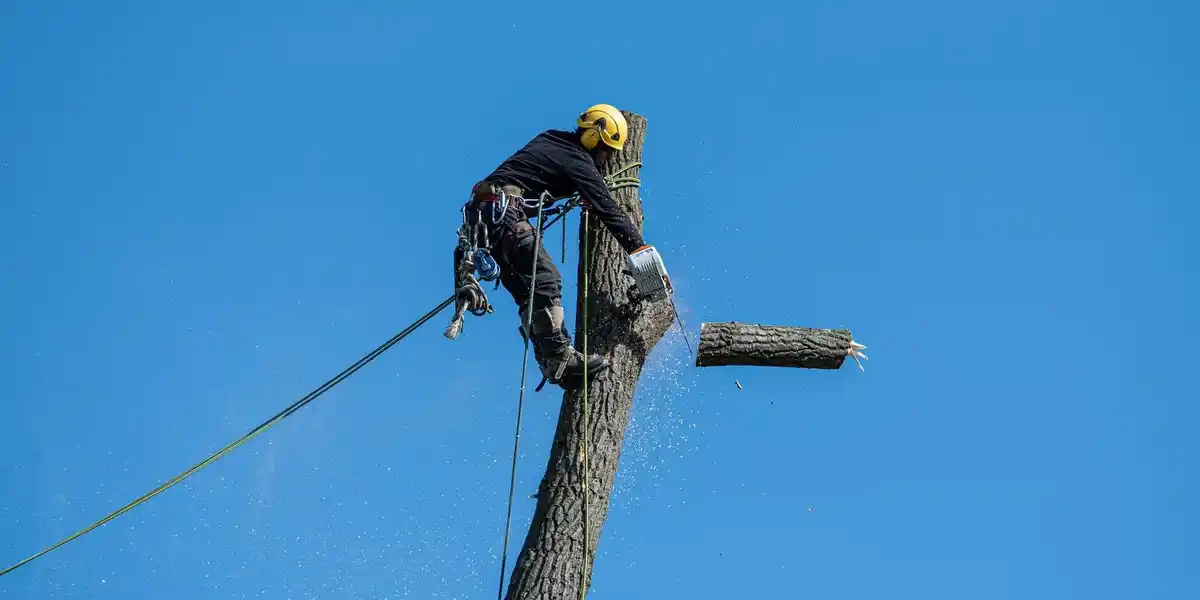
In older neighborhoods, a decades-old tree can reach the point where saving it is no longer realistic. Removal near a roof, fence or utility line usually calls for controlled lowering rather than a simple drop. That extra care is reflected in the price, along with the trunk size and how easy the yard is to reach. Big old trees in established neighborhoods tend to drop limbs where people and structures are below. Roots that have spread right up against foundations and sewer lines can cause costly damage over time. A experienced crew can often tell whether careful pruning will do or whether the whole tree has to come down. Stump grinding is a common add-on, and it also removes roots that could otherwise interfere with new plantings. Many cities and counties require a permit to remove protected or heritage trees, and rules vary by municipality. Check with your local government before anything gets cut. Ask whether the quote includes cleanup, hauling and stump grinding, since some companies list them separately. A pro should also walk you through how they'll protect the lawn, driveway and nearby structures. Insurance matters most on this job, so request proof of liability coverage and workers' compensation.
Keeping an Eye on Aging Trees Over Time
A tree health assessment is a good first step when you're unsure whether an old tree is worth keeping. An arborist inspection looks at the trunk, root flare, canopy and any signs of insect damage or decay. The findings can help you decide between pruning, cabling and removal. Large trees planted decades ago often have weakened limbs that hang over roofs and driveways. Roots that grow close to foundations and sewer lines can quietly cause damage that only show up years later. An arborist can explain whether those roots can be trimmed safely or whether the tree has to come down. Assessments generally cost far less than removal, so they're a sensible way to avoid guessing. Some owners schedule a checkup every year or two, especially for trees near the house. ISA Certified Arborists are credentialed through the International Society of Arboriculture, and asking about credentials is completely reasonable. Written reports can also help when you compare quotes from different companies. After a big storm, another look at the tree can catch damage you can't see from the ground. Ongoing monitoring keeps small issues from growing into more expensive ones.
Cost Factors for Tree Care in Queens
Tree work is usually priced per tree, and the cost depends on height, access and how much cleanup is needed. Trimming, removal, stump grinding and health checks each have their own general price range. Large mature trees near buildings tend to sit at the higher end because they need more care and equipment. A specialist can explain payment options, and some companies offer financing. Ask each pro what forms of payment they accept and when payment is due. Getting several written quotes is the easiest way to compare what's actually included.
How Queens Conditions Affect Mature Trees
Homes in Queens have a median age of roughly 73 years, so most of the trees trace back to the original construction. A growing season of 207 days gives those trees ample time each year to add heavy, reaching limbs. Over decades, that steady growth can push branches over roofs and roots toward footings and sewer lines. Roughly 50.3 inches of yearly precipitation keeps roots busy, and in no clay conditions the soil can expand and contract around them. Wind risk is rated very high, which counts when big old limbs hang over roofs and fences. A qualified arborist can assess which limbs need pruning and which trees may need to come down. In New York, As for rules, Checking those requirements before any cutting starts helps prevent delays later. Older trees near sewer lines and structures are usually worth a professional look before a storm season arrives. Comparing a few local tree services is the simplest way to see a fair price range for removal work in Queens. Acting early on an aging tree can cost far less than dealing with storm damage afterward.
Local Facts for Queens
How Comparing Tree services Works in Queens
Tell us about your trees
Describe the work you need, such as removal, trimming or stump grinding.
Compare local pros
Review tree care professionals serving your area and request written quotes.
Choose with confidence
Check insurance and credentials, then pick the pro that fits your needs and budget.
Take the Next Step for Your Trees
Whether you have one tall oak or a whole yard of mature trees, comparing quotes is a practical place to start. Older neighborhoods in Queens often have decades-old trees with aging limbs and roots close to home foundations, roofs and sewer lines. Tell us a little about your yard and the pruning or removal you have in mind. You can then review offers from independent tree care companies serving Queens. Each provider can assess which limbs need pruning and whether a tree is better removed. Take your time, ask questions and check what each quote includes, such as cleanup and stump work. There's no pressure, and you choose whether to move forward with anyone. Comparing a few offers is often the simplest way to see a realistic price range. Request your free quotes today and see what's available near you.
Call (877) 307-1322